
Checking for a Mason County Warrant
No official Mason County online active-warrant list exists. The county website, the Sheriff's site, the 79th District Court page, and the Ludington Police page do not publish a public warrant roster. Warrant details may surface inside court dockets, criminal case files, or support enforcement records. A stand-alone warrant lookup tool, though, was not found on any local site. Because of that, a warrant check moves through people, not a search box. Start with the office most likely to hold the order.
The dependable ways to run a Mason County warrant check are short and specific. Pick the route that matches the case you think exists, then call or write that office directly.
- Call or visit the Mason County Sheriff's Office at 231-843-3475 for arrest warrants and law-enforcement holds.
- File a written request through the Sheriff's FOIA channel at sheriff@masoncounty.net, and have your report number ready.
- Reach the 79th District Court at 231-843-4130 for misdemeanor, traffic, and failure-to-appear bench warrants.
- Contact the Friend of the Court at 231-843-4791 or FOC@masoncountymi.gov for support enforcement bench warrants.
- Ask the 51st Circuit Court Records Office at 231-845-1445 about felony warrants after a case is bound over.
- Search case dockets through MiCOURT for events tied to a District or Circuit case.
Caution: Do not rely on an unofficial people-search site for warrant status, since those pages are often outdated, wrong, or built to sell you a report.
Types of Mason County Warrants
Not every warrant means the same thing. A judge signs each one, but the reason behind it changes how it gets resolved. Some come from a new criminal charge. Others come from a missed court date or an unpaid support order. The table below sorts the main kinds you may run into across the local courts.
| Warrant Type | What It Means |
|---|---|
| Arrest warrant | A court order based on probable cause that authorizes police to take a named person into custody. |
| Bench warrant | An order issued from the bench, often for failure to appear, contempt, or noncompliance with a court order. |
| Search warrant | An order signed by a District Court judge that lets officers search a place or item for evidence. |
| Probation or parole absconder | A hold tied to state supervision, which may show as absconder status in the Michigan offender system. |
| Sealed warrant | An order kept out of public view until arrest or a court unsealing, common in ongoing investigations. |
Note: A bench warrant is not a criminal charge by itself, yet ignoring one can add new penalties and lead to arrest.
Mason County Sheriff Warrant Contacts
The Mason County Sheriff's Office is the first stop for most arrest warrants. Deputies serve orders, run the county jail, and keep the incident reports that back many warrants. Sheriff Kim C. Cole leads the agency from the office on North Delia Street in Ludington. Administrative staff answer phones during weekday business hours, while the jail itself runs around the clock. A quick call can confirm whether a name is tied to an active order and how a person should respond.
Mason County Sheriff's Office
302 N. Delia St.
Ludington, MI 49431
231-843-3475
Administration Mon-Fri 8 a.m. to 4 p.m.; jail open 24/7
Written records move through the Sheriff's public-records process rather than a phone call. The Sheriff's Freedom of Information Act page lists how to submit a request by mail, in person, or by email to sheriff@masoncounty.net. Its guidance asks you to have a report number ready when you fill out the form, which speeds the search.
A FOIA request is the formal path to a warrant or incident record the Sheriff holds. It works well when a phone call cannot confirm what you need, or when you want the paperwork in hand. Michigan's public-records law, MCL 15.231, gives residents the right to make that request.
Mason County Bench Warrants and Support Enforcement
Some Mason County warrants have nothing to do with a crime. They come from the Friend of the Court, the office that helps enforce child-support and custody orders. When a payer falls behind and other tools fail, a judge can sign a bench warrant to bring that person before the court. The office treats this step as a last resort, used only after other remedies have not worked. Contact before an arrest almost always leads to a better outcome.
The Friend of the Court child-support enforcement page explains how bench warrants fit into the enforcement process. It states that the goal is to bring the payer in front of the judge, not simply to jail them.
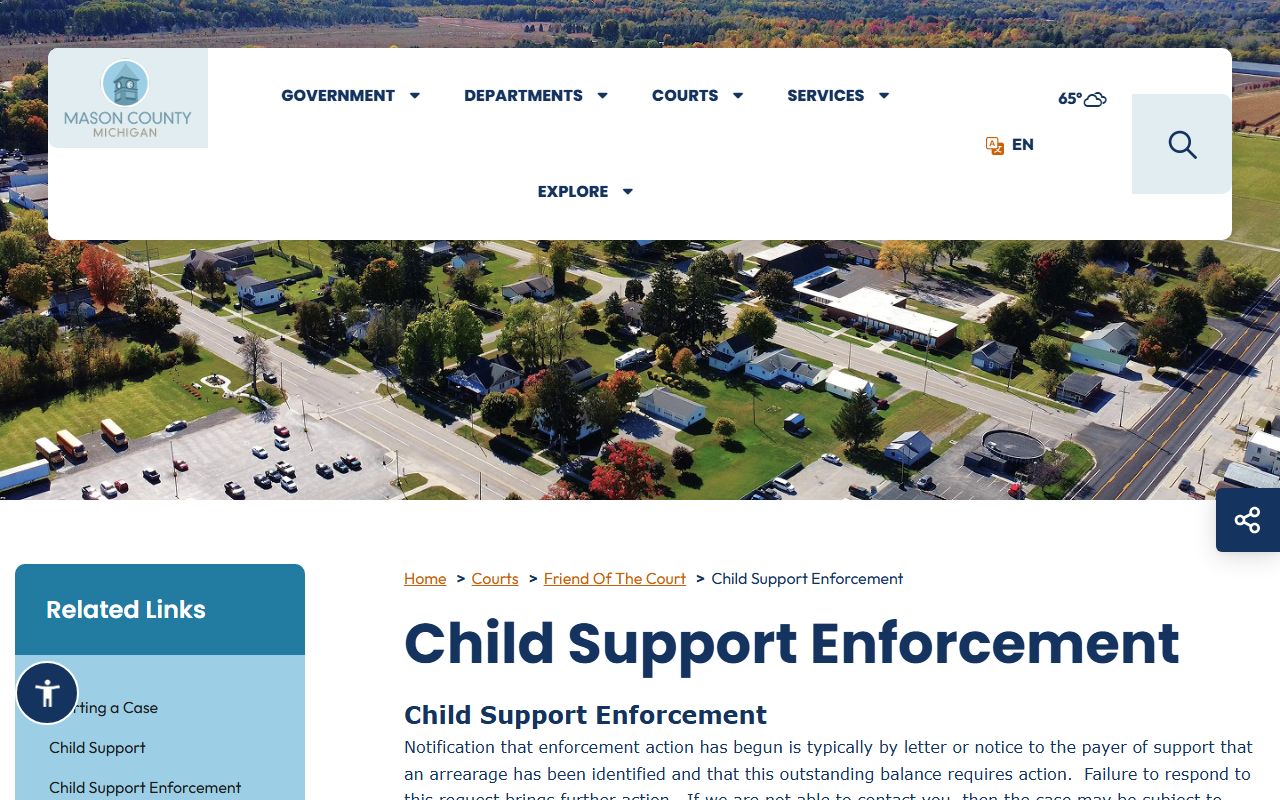
If you believe an active support-enforcement warrant may exist, reach the office before deputies act. Staff will often work with a payer to set up payment or a hearing and clear the matter. Email FOC@masoncountymi.gov or call 231-843-4791 to start that conversation.
The Friend of the Court main page lists the office address, phone line, and the rules for filing motions. It notes that motions need original signatures, so they cannot be emailed, a detail worth knowing before you send anything.
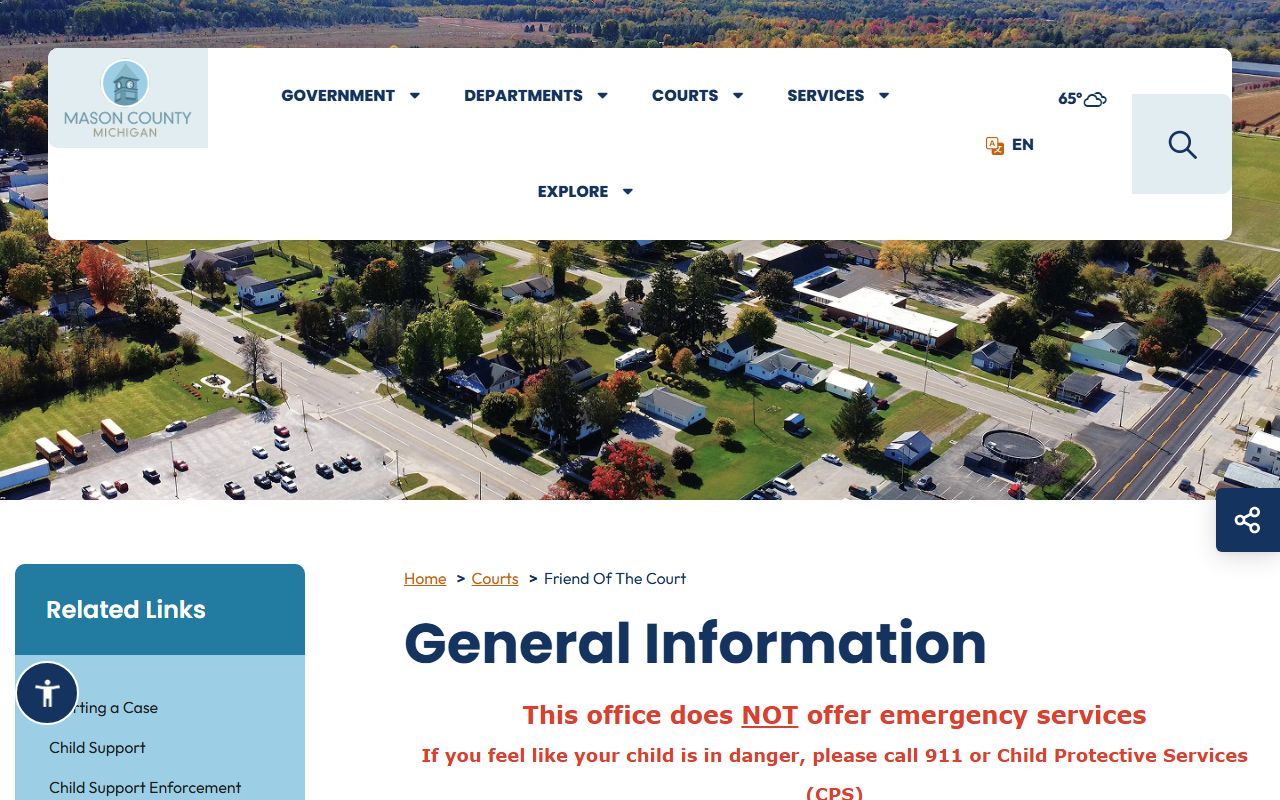
Reading the office page first tells you which line to call and what to bring. That saves a wasted trip and helps the staff pull the right case file when you make contact.
Mason County Court Warrants
Two trial courts handle most criminal warrants in the county. The 79th District Court deals with misdemeanors, traffic tickets, civil infractions, and the early stages of felony cases. Its judges also issue search warrants and handle failure-to-appear matters that lead to bench warrants. If a person missed a District Court date, that court is the place to call. The number for the 79th District Court is 231-843-4130.
Felony cases move up to the 51st Circuit Court once a case is bound over from the District Court. The Circuit Court and the County Clerk keep the felony criminal files, and warrants can appear inside those records. To ask about a felony warrant or a related case file, call the Circuit Court Records Office at 231-845-1445. Both courts sit inside the Historical Mason County Courthouse at 304 East Ludington Avenue in Ludington.
For docket detail on either court, the statewide MiCOURT case search lets you look up events tied to a criminal or civil case. The system is not built as a full active-warrant database, so it may not flag every open order. It does help you confirm a case number, a court date, or a filing that a warrant may attach to.
Note: A warrant can outlive the event that caused it, so an old missed hearing may still carry an active order until a judge recalls it.
Probation and Parole Warrant Status
People under state supervision face a different kind of hold. Probation and parole in Mason County run through the Michigan Department of Corrections, not the county alone. When a supervised person breaks a condition or drops out of contact, the state can list them as an absconder. That status often carries a warrant for a supervision violation. The local office works out of an annex tied to the Sheriff's Department and keeps standard weekday hours.
The county's Probation and Parole page explains that the office is part of the state corrections system and serves both District and Circuit cases. It gives the office location and hours for people who need to check in or ask about their status.
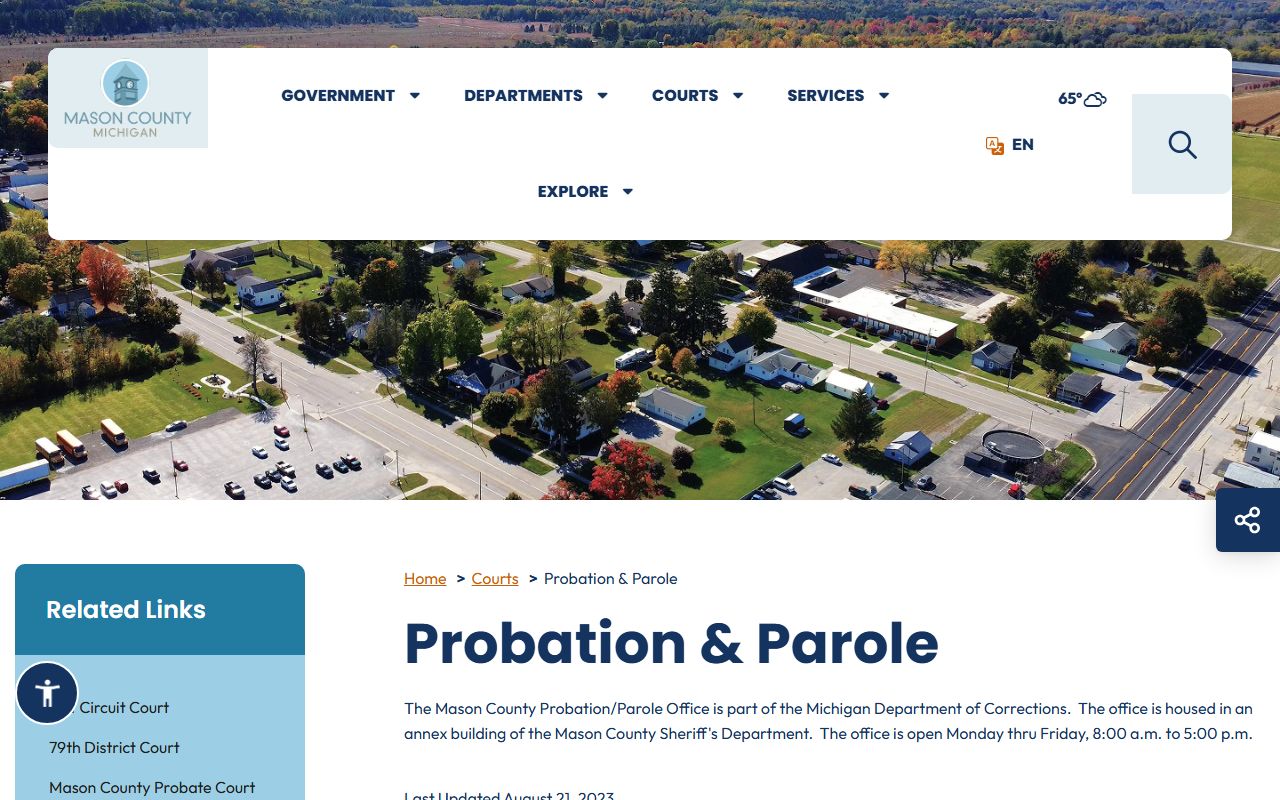
Anyone worried about a supervision violation should speak with their agent before the situation grows. An agent can explain whether a warrant has issued and what a return to compliance looks like. That step is far safer than waiting for an officer to make contact.
MDOC OTIS and Statewide Warrant Limits
Michigan has no public statewide warrant search open to residents. Law-enforcement systems that list every active order are closed to the public. The nearest state tool is the Offender Tracking Information System, or OTIS, run by the Department of Corrections. OTIS can show whether someone is on parole, on probation, or listed as an absconder, but it is not a warrant database. Treat it as a status check, not a full warrant lookup.
The OTIS offender search form lets you look up a state offender by name and other identifiers. A result can confirm supervision status that may point to an outstanding hold.
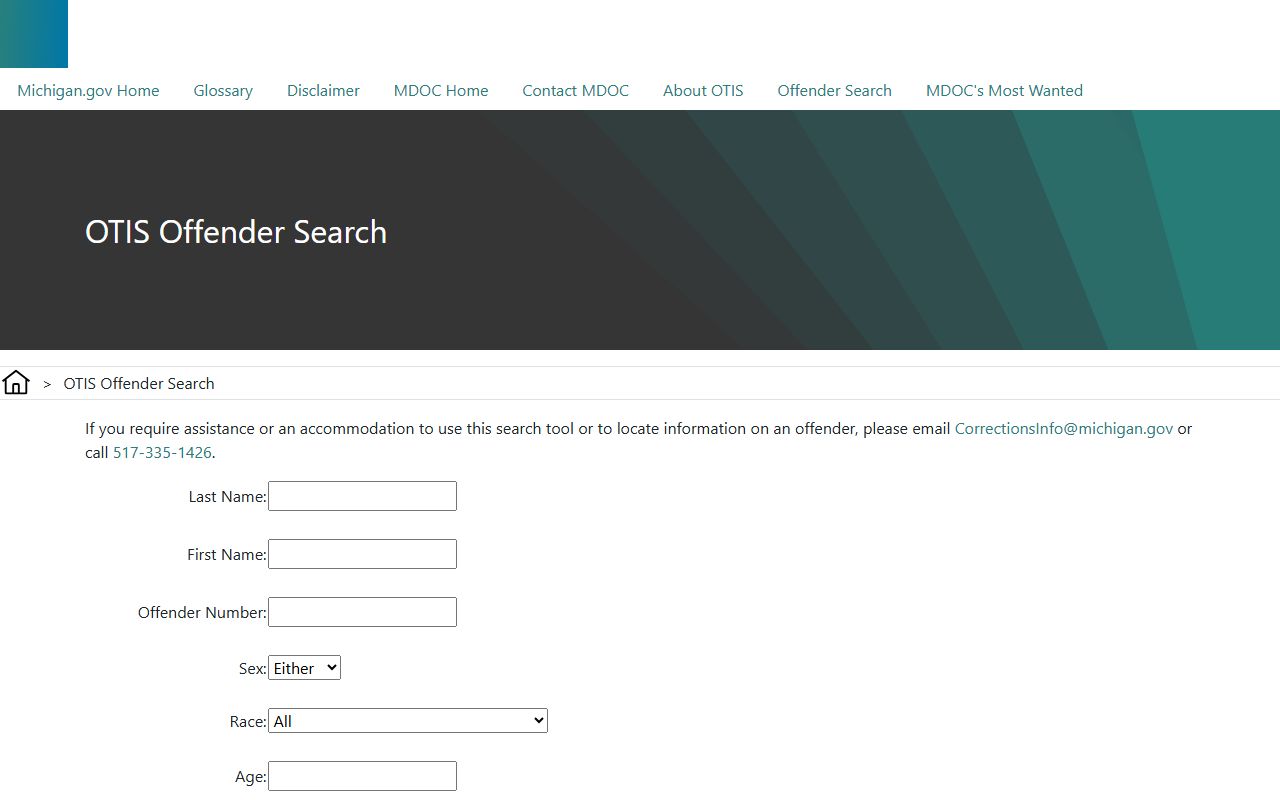
Read the result with care, because OTIS covers only people known to the state prison and supervision system. Someone with a local bench warrant and no state case will not appear there at all. The Michigan OTIS information page spells out what the tool includes and, just as important, what it leaves out.
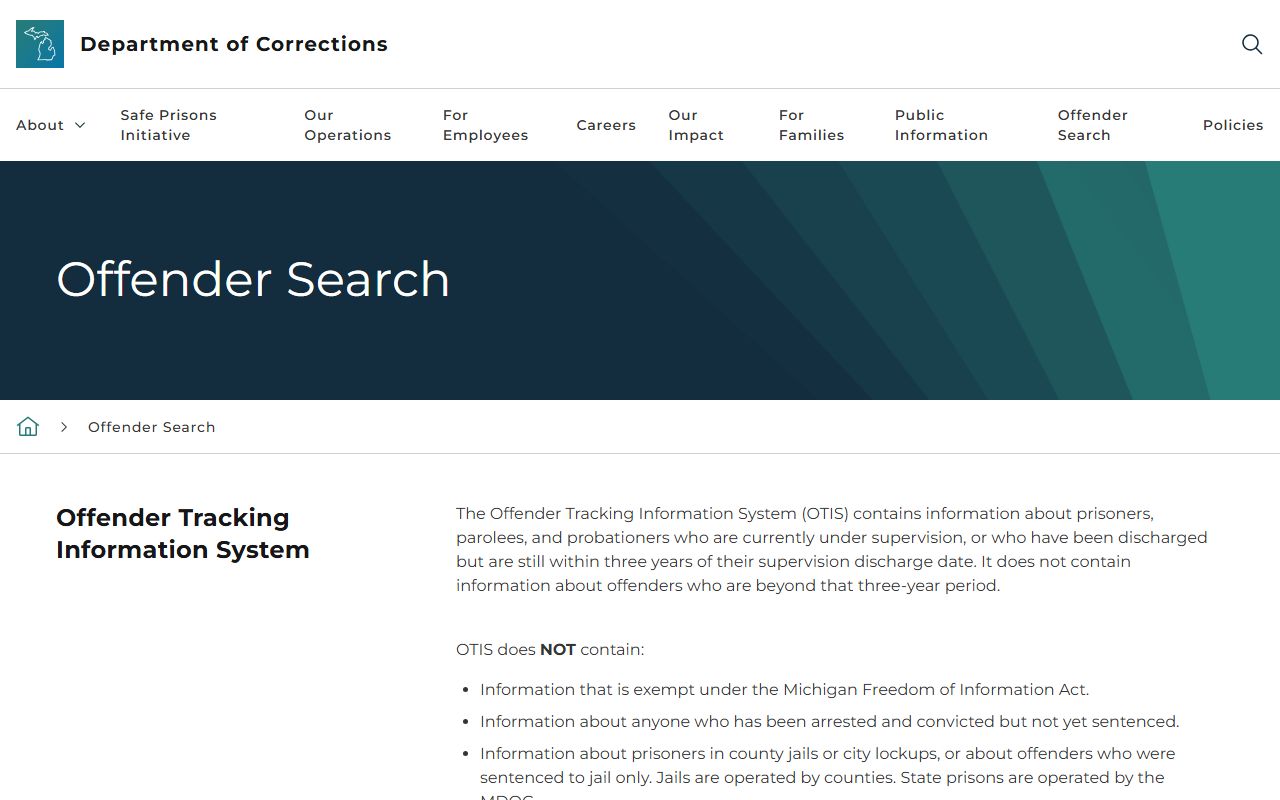
That scope note matters for a warrant check. If OTIS shows nothing, the order you are looking for may still exist at the county level. In that case, the Sheriff, the District Court, or the Friend of the Court is the right place to ask.
Note: OTIS reflects state corrections data only, so a clear OTIS result does not rule out a local Mason County warrant.
What a Mason County Warrant Record Shows
When warrant details do appear, whether in a court docket or a law-enforcement response, they follow a familiar pattern. Not every field is always visible, and sealed or juvenile matters carry heavy redactions. Still, the elements below are the ones you can expect to see when a record is public. The table pairs each field with what it tells you.
| Field | What It Shows |
|---|---|
| Person and identifiers | The named subject of the warrant and identifying details on file. |
| Case or file number | The court file the warrant attaches to, used to pull the wider record. |
| Issuing court | Which court signed the order, such as the District or Circuit Court. |
| Warrant type | Arrest, bench, search, failure to appear, or support enforcement. |
| Underlying charge | The charge or violation that prompted the order. |
| Issue date | The date the judge signed the warrant. |
| Bond amount and type | The bond set for release, if any, and its conditions. |
| Required appearance | The court date or hearing the person must attend. |
| Status | Whether the order is active, recalled, quashed, served, or closed. |
| Agency or officer | The agency handling service and any listed officer. |
Sealed, juvenile, and confidential matters are redacted or withheld entirely. A record that reads as thin is often that way by law, not by mistake.
Resolving an Outstanding Mason County Warrant
Learning that a warrant may exist is stressful, but a clear plan makes it manageable. The safest route runs through the right office and, often, an attorney. Acting early keeps small problems from turning into an arrest at work or home. The steps below follow the process the county describes for clearing an outstanding order.
- Skip the unofficial people-search sites and go straight to the source of the case.
- Identify the likely source, such as a missed 79th District Court date, a 51st Circuit felony or family case, a Friend of the Court support matter, or a law-enforcement investigation.
- Call the office that fits. For Friend of the Court, use FOC@masoncountymi.gov or 231-843-4791. For the Sheriff, call 231-843-3475. For the District Court, call 231-843-4130.
- Ask whether a court appearance, a bond, a payment, or a recall or quash order is needed to clear the warrant.
- If the District Court requires a bond, confirm the correct case and amount before paying through the court's phone or online payment path.
- For a criminal warrant, let an attorney contact the court or prosecutor to help schedule a surrender or a hearing.
Important: Speak with a lawyer before you turn yourself in, since counsel can arrange a surrender, argue bond, and protect your rights during the process.
Restricted Mason County Warrant Records
Not all warrant information is open to the public. Michigan law and court rules shield some orders while a case is sensitive or a person is a minor. A sealed warrant or indictment may stay private until an arrest is made or a judge unseals it. That secrecy protects ongoing investigations and keeps a suspect from fleeing before service.
Juvenile matters carry their own protections and rarely appear in a public search. Federal warrants sit outside the county system entirely, since they run through federal courts and agencies rather than the Sheriff or the District Court. When you request records, expect redactions on anything tied to a minor, a victim, or a confidential file.
These limits are the reason a warrant check often ends with a phone call rather than a printout. If an office cannot share a detail, it is usually following the law, not stonewalling. The Sheriff, the courts, and the Friend of the Court can each explain what they are able to release and how to request the rest. Anyone tracking a related criminal file can also review the county criminal court records for the case a warrant attaches to.