
Mason County Arrest Records and Court Charges
A Mason County arrest record documents the arrest itself. It notes who was taken into custody, which agency made the arrest, and the booking that follows at the jail. In Mason County, an arrest may come from the Sheriff's Office, the Michigan State Police, or a city agency such as the Ludington Police Department. The arrest and booking side of the story sits with the jail, not the court. For the roster, booking detail, and custody status, the Mason County inmate records page is the right starting point.
The court charge record is a separate file. After an arrest, the Prosecuting Attorney reads the reports and decides what court charges after arrest will actually be filed. Those charges are entered with the court and tracked through the case, from the first appearance to the final outcome. An arrest does not settle the charges, and the charges can shift as the case moves. The full case file, plea, and sentence live in the Mason County criminal court records.
Police agencies handle the arrest and hold their own reports. The Ludington Police Department page lists the city agency that arrests people inside Ludington and files reports with the prosecutor.
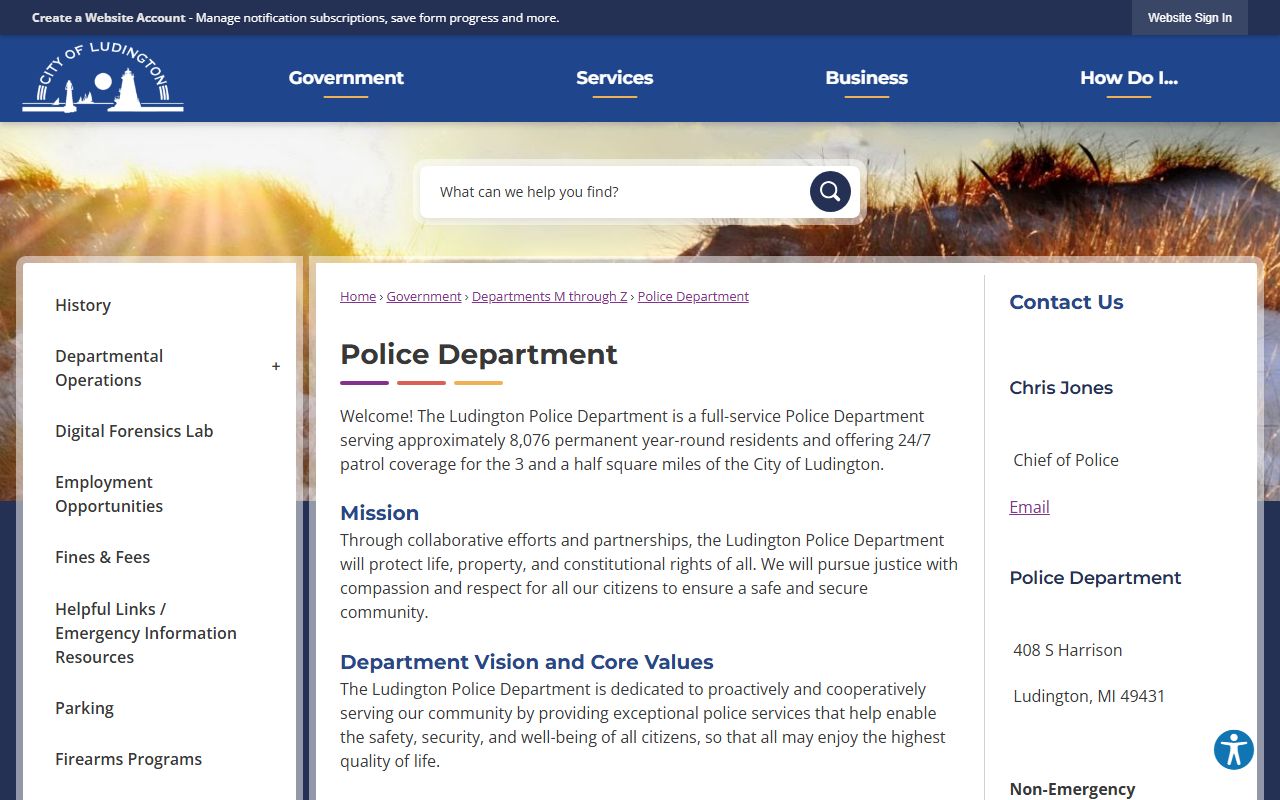
City police, county deputies, and state troopers all feed arrest reports into the same charging process. The agency makes the arrest, but the prosecutor decides the charges that become the court record.
How to Find Mason County Arrest Records
Charges show up in the court case file, and Mason County links public case searching to MiCOURT Case Search, Michigan's statewide One Court of Justice system. Misdemeanors and felony first steps route through the 79th District Court, and felonies bound over for trial move to the 51st Circuit Court. The arrest and booking side, by contrast, sits with the jail roster on the inmate records page.
- Open the MiCOURT route for the 79th District Court or the 51st Circuit Court.
- Read the terms of service and clear the "I'm not a robot" check, then click continue.
- Enter a party name or the case file number and submit the search.
- Open the case by its file number and read the charge list, including each charge code, severity level, and current status.
MiCOURT is a public information tool, not the official file. The county warns that Michigan and federal law keep some information nonpublic, and that the online view does not replace the record on file with the court. For charges that predate online records, or for certified copies, contact the court that holds the case.
Who Files Charges in Mason County
Police make arrests, but they do not decide the charges. In Mason County, the Prosecuting Attorney is the chief law enforcement official and holds the charging power. Beth M. Hand serves as the elected Prosecuting Attorney, an office with a four-year term under the Michigan Constitution. The office lists more than 250 statutory duties, and reviewing law enforcement reports to make charging decisions is one of the core ones. The prosecutor represents the People of Michigan in the District, Circuit, and Family Division courts.
The charging decision is a review, not a rubber stamp. After an arrest, the prosecutor reads the police reports, weighs the evidence, and decides whether to file, what to file, and at what level. A case can be charged as filed, charged at a lower level, or declined. That is why an arrest does not always turn into a court charge, and why the charge on the court record may differ from the reason given at arrest.
Records held by the prosecutor follow a separate request path. The Prosecutor's FOIA page explains how to request office records by email, mail, fax, or hand delivery.
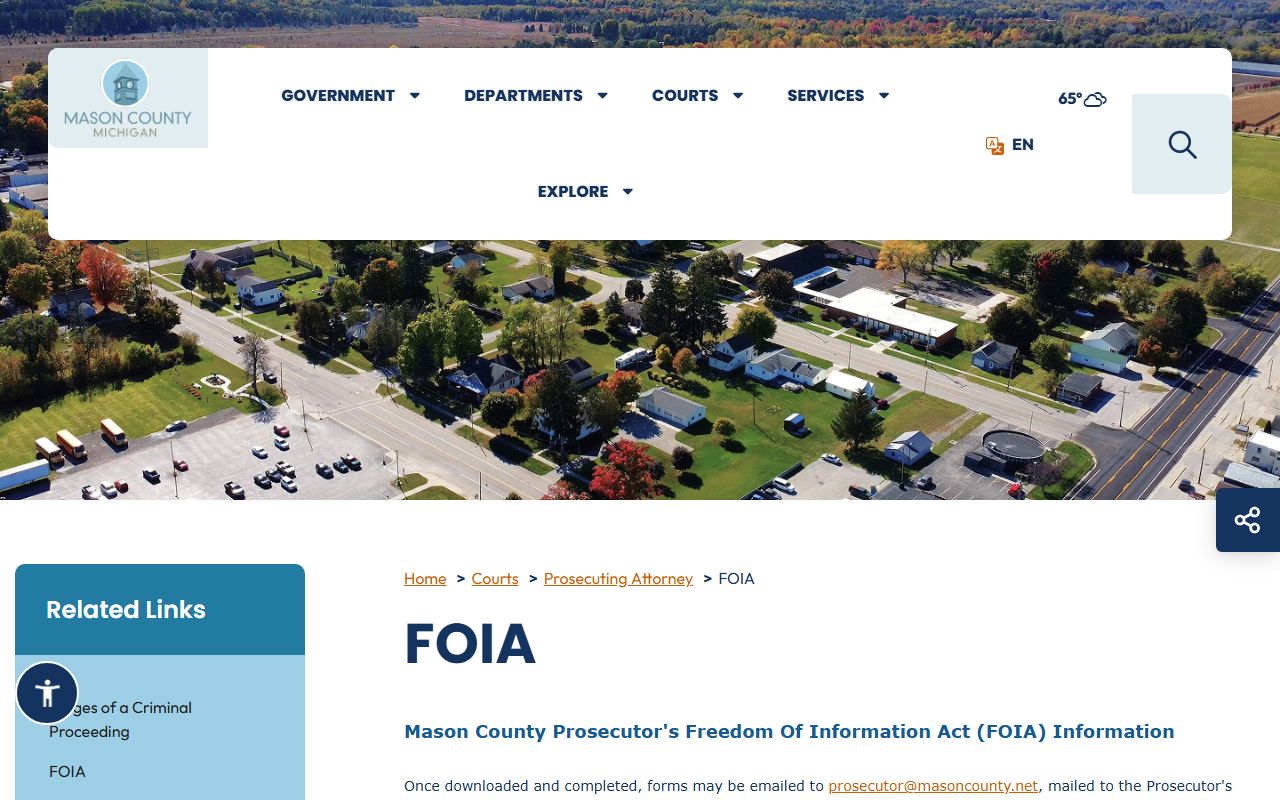
The prosecutor's office administers its own records policy, apart from the general county FOIA officer. That split matters when someone wants the charging paperwork rather than the public court docket.
How Charges Get Filed: Complaint, Information, and Indictment
The charge record begins when the prosecutor files a charging document. The arrest and booking come first, then the charging paper opens the court case. Michigan uses three main charging documents, and which one appears depends on how serious the offense is and how the case reaches court. Each one names the person, states the offense, and cites the statute the charge rests on.
| Complaint | Information | Indictment | |
|---|---|---|---|
| Filed By | Officer / Prosecutor | Prosecutor | Grand Jury |
| Common For | Misdemeanors | Many felonies | Rare in Michigan |
| Court | 79th District Court | 51st Circuit Court | Circuit Court |
| Starts | The case | Trial phase | The case |
A complaint is the first charging paper and starts most cases. Misdemeanors stay in the 79th District Court and are resolved there. Felonies also begin with a complaint in District Court, where a probable cause conference and a preliminary examination decide whether the case moves forward. If the case is bound over, the prosecutor files an information in the 51st Circuit Court, which is the felony charging document for the trial phase. An indictment comes from a grand jury and is uncommon in Michigan, where most felonies proceed by complaint and information instead.
Charge Status in Mason County Court Records
Charges are not fixed once filed. As a case moves, a charge can be amended, reduced, added, dropped, or dismissed, and the court record tracks each change on the register of actions. Reading the status matters as much as reading the charge, because the first charge listed may not be the one that survives. The terms below turn up often in Mason County charge records.
| Status | What It Means |
|---|---|
| Pending | The charge is filed and the case is open. No plea or verdict has resolved it yet. |
| Amended / Reduced | The charge was changed, often to a lower level, through negotiation or new facts. |
| Dismissed | The court dropped the charge. It may be dismissed with or without the option to refile. |
| Nolle Prosequi | The prosecutor chose not to pursue the charge, ending it without a conviction. |
A single case can hold several charges at once, each with its own status. One charge may proceed to a plea while another is dismissed or reduced. The register of actions shows the sequence, so the current status of every charge can be read in order.
Note: A dismissed or nolle prosequi charge is not a conviction, but the filing may still appear in the public court record unless a court later makes it nonpublic.
Mason County Charge Codes and Severity
Every charge ties back to a specific statute, and the court record lists the code along with the offense name. The code points to the Michigan Compiled Laws section the charge rests on, which fixes exactly what the person is accused of doing. Two people arrested in the same incident can face different codes if their conduct differs.
Severity sorts charges into levels. Felonies are the most serious and route to the 51st Circuit Court for trial after the District Court steps. High-court misdemeanors also reach Circuit Court. Ordinary misdemeanors stay in the 79th District Court, along with civil infractions, which are the lowest level and are not crimes at all. One arrest can produce several separate charges at once, mixing felony and misdemeanor counts, and each count is coded and tracked on its own.
Charges vs. Convictions
Being charged is not the same as being convicted. A charge is an accusation the prosecutor files. A conviction is the outcome after a plea or a trial, and it carries a much higher burden of proof. Many charges never become convictions, because cases end in dismissal, reduction, or acquittal.
| Charge | Conviction | |
|---|---|---|
| Stage | Accusation | Verdict or plea |
| Burden of Proof | Probable cause | Beyond a reasonable doubt |
| Decided By | Prosecutor | Judge or jury |
| Public Record | Yes | Yes |
This distinction is easy to miss when reading a record. A case may list a serious charge at the top, yet close with a plea to something far lighter, or with no conviction at all. The disposition, plea, and sentence tell the real outcome, and those sit in the criminal court records file rather than on the arrest side.
Statewide Charge and Criminal History Lookups
Some charges and convictions roll up into statewide systems beyond the county court file. These tools do not show every Mason County arrest, and none of them is a booking blotter, but each covers part of the picture. They are free to search and are run by state agencies.
The Michigan Department of Corrections runs the Offender Tracking Information System, or OTIS, which covers people under state prison, parole, or probation supervision, plus those discharged within the last three years. It is not the county jail roster. Michigan VINE offers custody and case notifications, though it is not the official court file either. For sexual offenses, convictions can appear on a separate public registry.
The Michigan State Police maintain the state's public sex offender registry. Their registry information page explains that the site helps the public learn about registered offenders who live or work nearby.
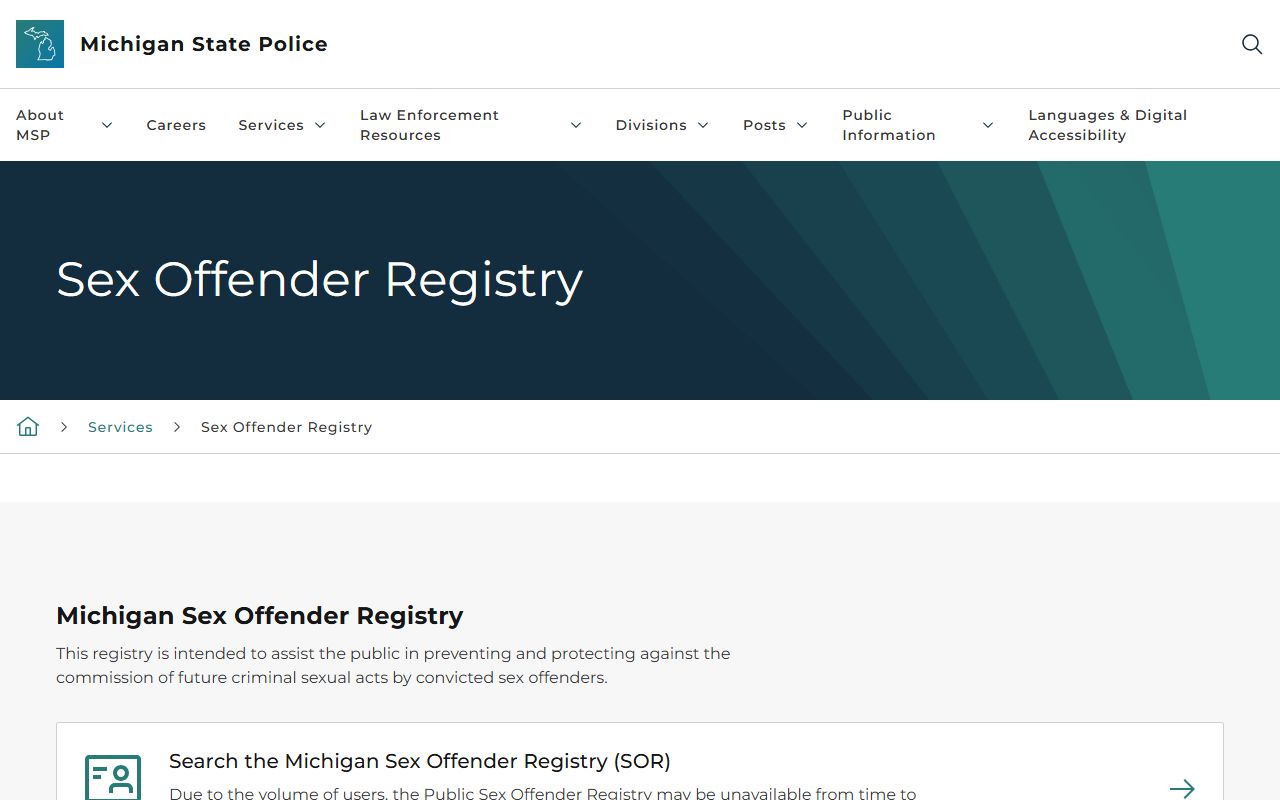
The registry is built under the Sex Offenders Registration Act, MCL 28.721, which sets who must register and what the public may view. It reflects convictions, not mere arrests or pending charges.
Searching the registry is straightforward once the right fields are used. The registry search form accepts either a name pair or registration number, or an area search by street, city, county, or ZIP code.
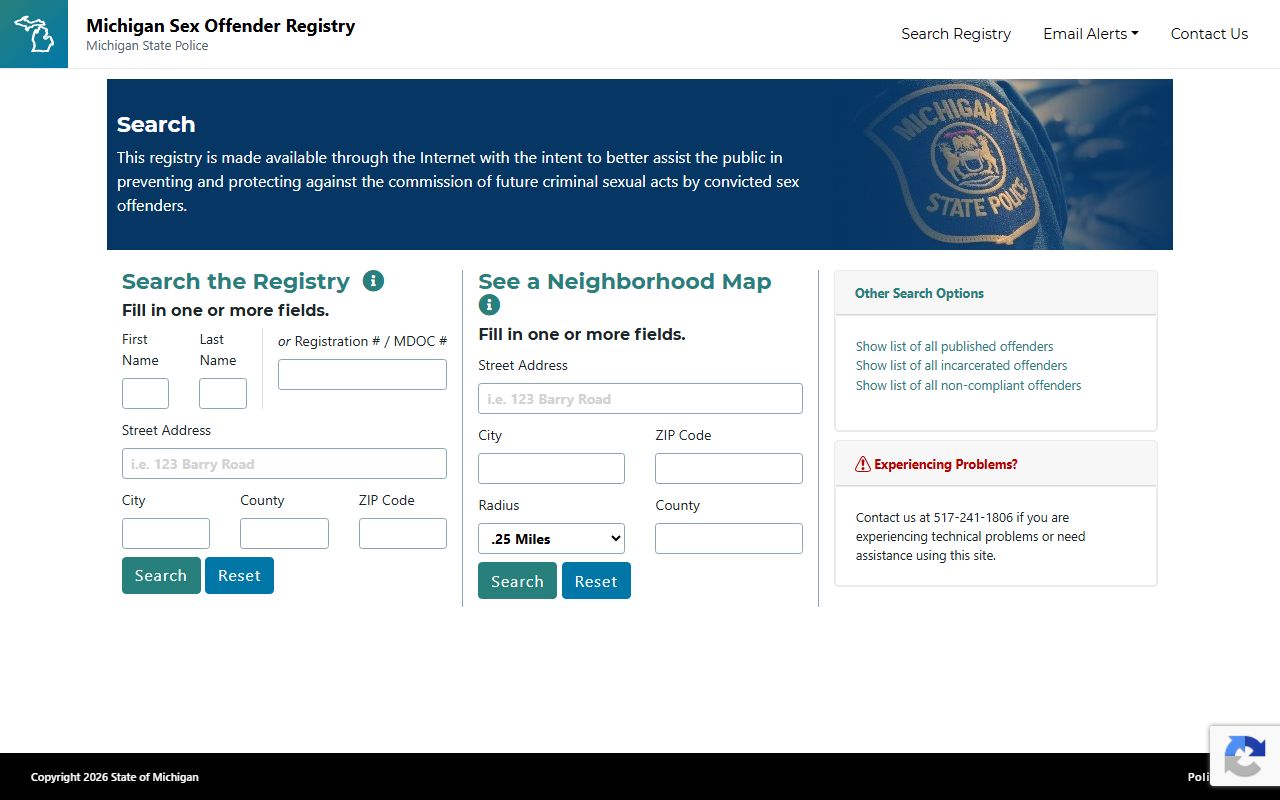
Choosing Mason for the county field returns registrants in the area. A neighborhood map view is also available for a broader look at a specific location.
Background Check Considerations
Court searches and registry lookups answer casual questions, but they are not formal background checks. A charge you find online is public, yet a raw charge record does not tell the full story, since status changes and dispositions may not be obvious at a glance. Employers, landlords, and licensing bodies that make decisions based on records must follow the Fair Credit Reporting Act and use a compliant screening process rather than a casual search.
Important: This site is not a consumer reporting agency under the Fair Credit Reporting Act, and its information may not be used for employment, tenant, credit, or licensing decisions.
Restricted Charge Records in Mason County
Not every charge is open to a public search. Juvenile charges are heavily restricted under Michigan law, and access is limited by statute. Sealed matters, ongoing investigations, and some family-division records also stay out of the public view. The county cautions that Michigan and federal law keep certain information nonpublic on MiCOURT, so a public search will not show restricted data.
Michigan uses the term "set aside" for what many call expungement. Under MCL 780.621, a person may apply to set aside eligible convictions, and MCL 780.623 governs how a record is treated afterward. A set-aside order makes the public conviction record nonpublic, subject to statutory exceptions, so a search that once showed a charge may no longer display it. For a Mason County case, the application is filed in the court that finally handled it, the District Court or the Circuit Court.
Juvenile charge records carry their own protections. Access to many juvenile court records is limited under MCL 712A.28, which restricts who may inspect them. When a public search returns nothing, the record may simply be one the law keeps closed rather than one that does not exist.